Why I’m building AI creators that admit they’re AI
Most AI influencers pretend to be people. I’m building three that say they’re AI on day one. Here’s why, and what I’ll share along the way.
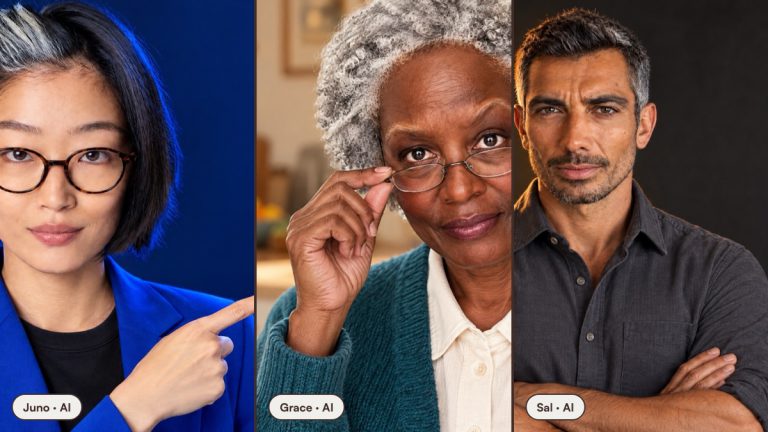
Today three AI creators went live. Juno, Grace and Sal.
None of them are people. All of them say so.
That’s the whole idea.
The problem with fake people
AI influencers are everywhere now. Most of them are built to pass as human. Perfect skin, perfect life, no mention of how they were made.
It works until it doesn’t. A recent survey found 45% of people wouldn’t knowingly trust an AI influencer. Nearly 90% want AI content disclosed. Once people find out, the trust is gone.
So I went the other way.
AI that’s honest about it
Each avatar opens with the truth. Juno’s bio says “AI reviewer. Not a person.” Grace says “I’m an AI” before she says anything else. Sal says it in his first ten seconds.
Then they have to earn attention the old way. By being useful.
Three rules
1
Every avatar says it’s AI, everywhere.
2
They only report on tests that were actually run. No fake “I’ve used this for months.”
3
Nobody gets reviewed without asking first.
What I’ll share here
Everything. The tools. What each video costs to make. Follower counts, views and what the avatars earn. What I’d do differently.
Some weeks will look good. Some won’t. Both get posted.
At day 60, the weakest avatar gets reworked or replaced. You’ll see that call get made here too.
If you want to follow along, the build log goes out once a week.
The weekly build log
Get the build log every week
What shipped, what flopped, and the numbers behind both. One email a week. No spam, no hype.
Unsubscribe anytime. See the Privacy Policy.